

Educational content, reviewed for accuracy against published clinical literature. Not medical advice.
Constipation affects 12-37% of GLP-1 users and has the longest average duration of any GI side effect at approximately 47 days. Unlike nausea, which tends to improve quickly, constipation often persists if proactive habits aren’t established early.
Why This Can Happen
GLP-1 medications slow the entire digestive tract, not just the stomach. When food moves more slowly through your intestines, more water gets reabsorbed, producing harder, drier stool. Additionally, eating less (a normal effect of these medications) means less material moving through your system. Reduced fluid intake compounds the problem, if you’re eating less, you may be drinking less too.
How It Commonly Shows Up
You may notice less frequent bowel movements, straining, a feeling of incomplete evacuation, or harder stools than usual. Some people experience mild abdominal discomfort or bloating alongside constipation. It can develop within the first few weeks and persist if not addressed with fiber and hydration.
Lifestyle Ways to Manage It
Fiber targets (specific amounts):
- Aim for 25-30 grams of soluble fiber daily
- Increase fiber gradually (add 5g per week) to prevent gas and bloating
High-yield sources:
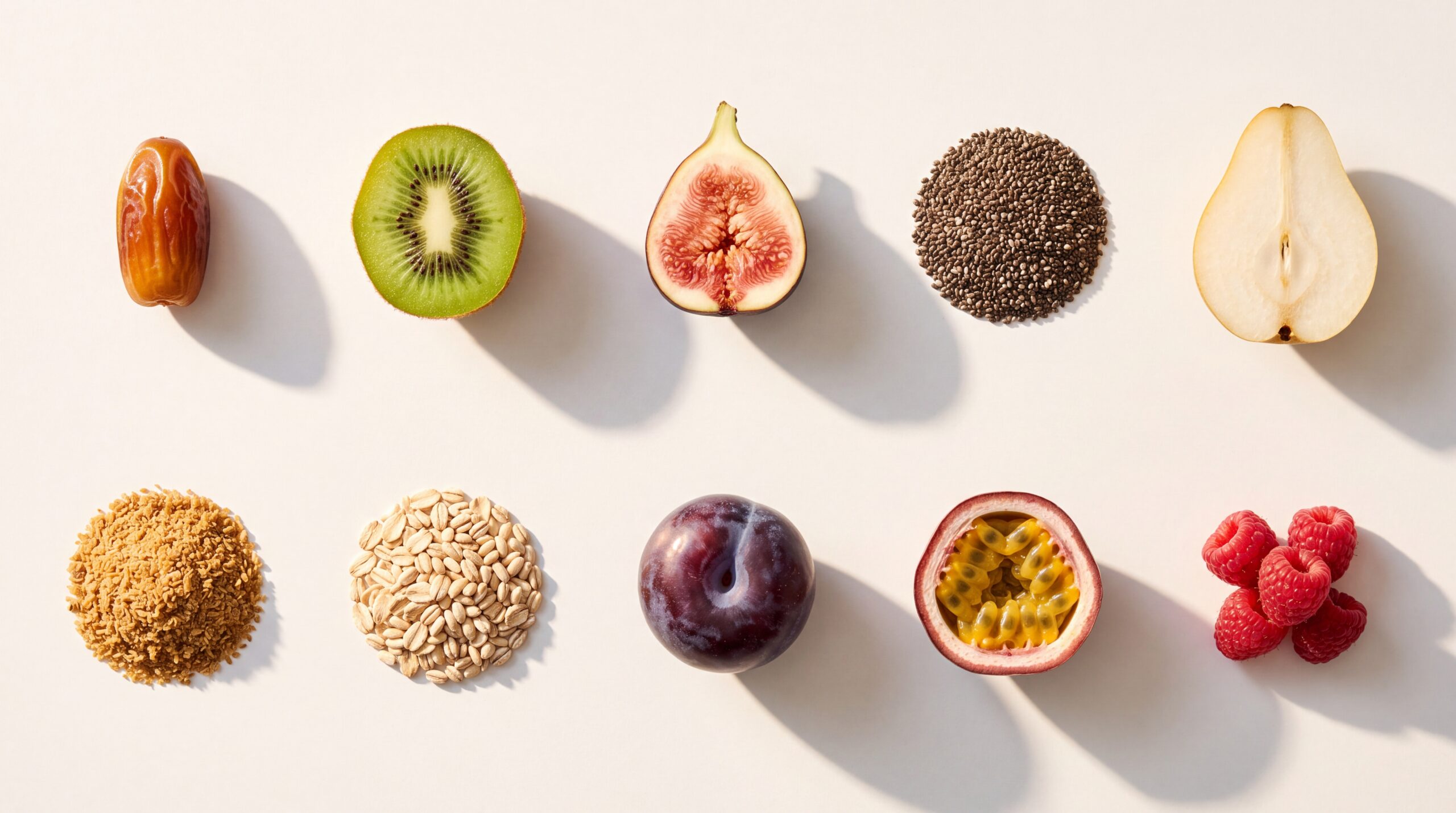
- Raspberries: 8g fiber per cup
- Black beans: 15g fiber per cup
- Oats: 4g fiber per cup
- Chia seeds: 10g fiber per 2 tablespoons
- Avocado: 10g fiber per whole avocado
Hydration (non-negotiable):
- Minimum 2-3 liters (80-100 oz) daily
- Fiber without adequate water makes constipation worse
- Drink in small sips throughout the day, primarily between meals
- Warm water or herbal tea in the morning can stimulate bowel activity
Movement:
- Walk 20-30 minutes daily, this directly stimulates intestinal motility
- A post-meal walk is especially effective
- Any consistent movement helps; sedentary days worsen constipation
Timing:
- Establish a consistent bathroom routine, your gut responds to regularity
- Don’t ignore the urge; delaying bowel movements trains your body to delay further
Prevention-Focused Habits
Start fiber and hydration habits before constipation develops, they’re easier to maintain than to establish after symptoms appear. Track fiber intake for the first two weeks to ensure you’re hitting 25-30g. Make water your default beverage. Build a daily walk into your routine from day one of treatment.
Special Considerations
Reduced food volume: If you’re eating significantly less, constipation may partly reflect less material in your system. Focus on fiber-dense foods to make every bite count, vegetables, beans, and whole grains provide bulk alongside nutrition.
Travel: Constipation commonly worsens during travel due to disrupted routines, dehydration, and different food options. Increase water intake proactively and pack fiber-rich snacks.
Long-term: Unlike nausea, constipation doesn’t always resolve on its own through adaptation. Ongoing attention to fiber and hydration is typically required throughout treatment.
Reassurance & Support
Constipation is uncomfortable but highly responsive to lifestyle interventions. Most people find that consistent fiber intake (25-30g) and adequate hydration (80-100 oz) resolve the issue within 1-2 weeks. If constipation becomes severe, painful, or doesn’t respond to these changes, consult your healthcare provider.
How Blum Helps
- Water tracking to stay on top of the hydration that resolves most GLP-1 constipation
- Chef bot generates fiber-forward, GLP-1 friendly recipes and sends the ingredients straight to Instacart
- Food logging via AI photo or voice makes it easy to see whether you’re actually hitting your fiber
- Steps tracking encourages the daily movement that stimulates digestion
- Side effect log tracks constipation patterns; Nora AI finds trends and builds a report you can share with your provider
Blum · GLP-1 companion
Stay ahead of it with water and fiber tracking
Log your hydration and meals, and let the chef bot build fiber-forward recipes.

Sources
- Wharton S et al. Gastrointestinal tolerability of GLP-1 receptor agonists. review. https://pmc.ncbi.nlm.nih.gov/articles/PMC9542252/
- Wilding JPH et al. STEP 1. NEJM 2021. https://www.nejm.org/doi/full/10.1056/NEJMoa2032183
Related articles
This article is general educational information about GLP-1 medications and is not medical advice. It does not replace guidance from your prescriber or pharmacist. Always follow your healthcare provider’s instructions, and contact them about any symptom that is severe, persistent, or concerning.
Dealing with constipation on GLP-1s?
Join the conversation in the Blūm Community to see what other GLP-1 users are experiencing, share what is working for you and connect with people on a similar journey.
